Bridging the Deployment Gap
Why we are building bentic
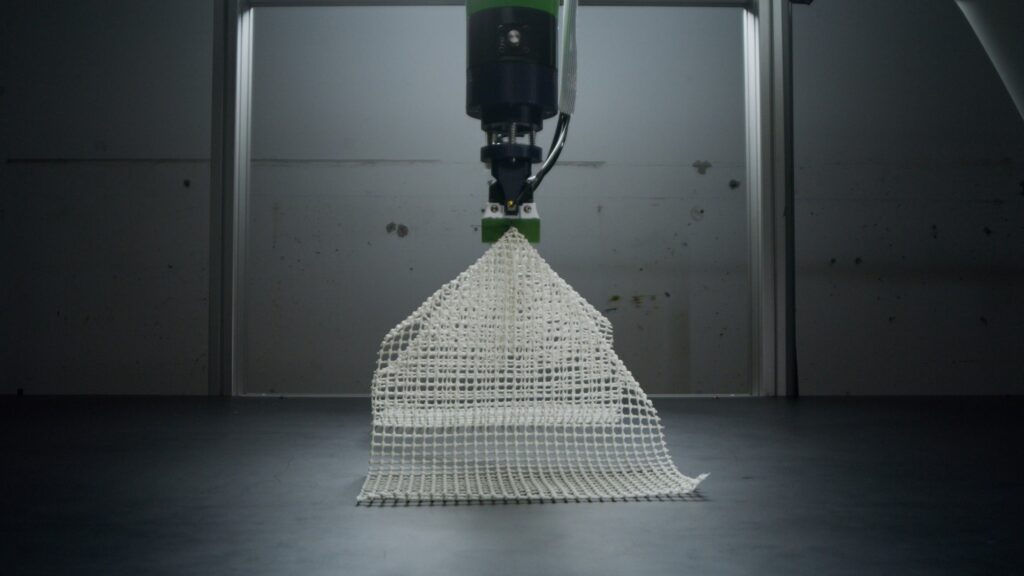
Record funding, flat deployments
Robotics has never attracted more capital than it does today. That money funds impressive demos and has pushed robot learning forward faster than ever. On the factory floor, the picture is a different one. Pilots, yes. But in Europe and the Americas combined, the number of industrial robots installed each year has barely moved since 2018.
So why do so few of these demos turn into products that run in factories, shift after shift? After half a decade of building physical AI for automation, our answer is simple: most of them do not pay off. And it is the reason we are building bentic.
The test every customer runs
The labor shortage is real. Businesses on both sides of the Atlantic struggle to staff their shifts, and that is usually why they come to automation companies. But a shortage alone does not turn a bad investment into a good one. A robot can never cost the customer more than the work it takes over. And if the investment has not paid back after three years, ideally two, there will be no second system and no roll-out.
Take one employee who costs $50,000 a year, in a plant running two shifts. With a two-year payback, a customer might be willing to spend up to $200,000 on a system that replaces that work. That sounds generous. But it only holds if the robot delivers the same output as the people it replaces.
This is where most business cases break. A robot that works at a fraction of human speed is worth only a fraction of that budget. A robot that stops every few hours for help is worth less again. The budget does not shrink a little. It collapses, and with it the room for arm, gripper, compute, safety and integration.
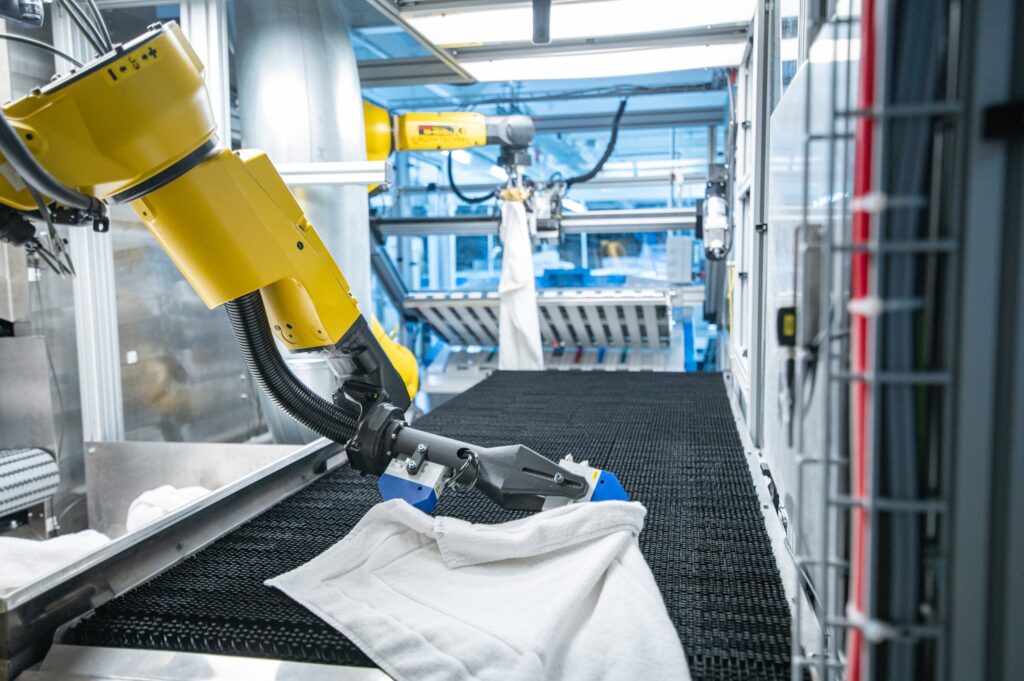
Customers want to buy a solved task
Over years of deploying automation in our customers‘ factories, one lesson has held: the deciding factor is not the technology under the hood, but stability and reliability. Does it work, shift after shift, at the speed of their people? Customers do not buy a technology. They buy a task that is off their list.
Our rule of thumb: whatever can be automated at today’s cost already is. A recent study by Anthropic puts this into numbers. Robots could technically do about three quarters of physical job tasks in the US today, but they are cheaper than a person for only 0.3% of all job tasks (Anthropic, 2026). That matches what we see every day. The gap between what robots can do and what pays off is enormous.
The tasks that are left are the hard ones: too variable, too soft or too context-rich. Think of foils, cables and textiles, materials that bend, fold and slip. Here robots are still far behind human skill. And where they come close, they are usually too slow to clear the profitability threshold.
Variety is not complexity
Many people expect humanoids and large general-purpose AI models to close this gap. We follow their progress closely and with real respect. Our doubt is not about their intelligence. It is about what they are built for.
General-purpose models are the right answer to variety. When a system has to handle thousands of different situations, it needs broad knowledge. But variety is not the same as complexity. Telling a hundred kinds of screws apart is varied, but simple. Routing a cable through a tight harness is a single task, but a complex one. It needs depth, not breadth.
Think of how an experienced worker handles a familiar part. Most of the movement happens almost automatically. Attention goes to the one moment that is tricky: the connector that has to click, the foil that starts to fold. A model built for breadth runs every motion through the same heavy network, the easy ones included. On today’s hardware, that costs time in every cycle.
General world models have the same problem: they learn how everything in the physical world moves. A robot handling cables does not need to know how water flows. Complex tasks call for tailored models that go deep in one domain, not for ever larger models that know a little about everything.

The edge sets the limit
Couldn’t the heavy models simply run in the cloud? For real-time control, no. A robot’s control loop works in milliseconds, and it cannot wait for a network round trip, however good the connection. Reliable high-speed connectivity is not a given on many factory floors, even (or especially) in Central Europe and the US. And many customers do not want their production data to leave the plant at all.
So physical AI, the AI that perceives and acts in the real world, has to run on the edge, inside the factory. That brings the costs back in. Every dollar of compute and every kilowatt on site comes out of the same budget that a slower robot has already shrunk. High-end hardware for large models can quickly cost more than the business case allows. No ROI, no roll-out.
No roll-out, no data
This closes a circle. Ken Goldberg of UC Berkeley has described a data gap of 100,000 years between what language models were trained on and what robots have available (UC Berkeley, 2025). His proposal is to get real robots into production, so that they collect data while doing useful work.
We agree. But robots only reach production at scale if they clear the customer’s profitability threshold. Without ROI there is no roll-out. Without roll-outs there is no data. And without data, the models do not get better.
That is the circle we want to break.
Our answer: Automation of Automation
Until now, there have been two ways to automate a task, and each fails at a different point. Classical automation on the one hand builds an expert for one task. It runs fast and cheap, but every new task means weeks or months of engineering by hand. General-purpose models on the other hand promise to learn any task with little engineering, but on today’s edge hardware, they are often too slow and too expensive for production that has to keep pace.
We want both: the speed and lean hardware of an expert, and the scalability of a general system. Experts do not scale on their own. They scale when they run on standardized hardware and, above all, when they are built automatically.
This is what we are building with JUPITER, our Automation-of-Automation platform. For the user, JUPITER is no-code. They describe the problem and what the solution has to deliver: accuracy, speed, reliability. The platform does the rest. It generates a solution, simulates and tests it, improves it, deploys it and keeps managing it in production.
Under the hood, JUPITER is an agentic system built on a mixture of experts. Two kinds of experts matter most:
Domain-specific world models. They predict how a material behaves while the robot handles it: how a cable bends, how a foil slides, how a textile folds. They learn from physically accurate simulation and from real-world video. And they go deep in one domain instead of trying to model the whole world.
Action experts on the edge. They decide where the robot moves and plan how it gets there. Wherever the task allows, the robot moves at full speed. Where slower, more precise manipulation is needed, the action expert takes over the fine control.
We start with the toughest challenge we know: deformable objects. What a system learns about materials that bend, fold and slip carries over to rigid objects. The reverse is not true. And every expert JUPITER builds makes the next one faster and cheaper to create.
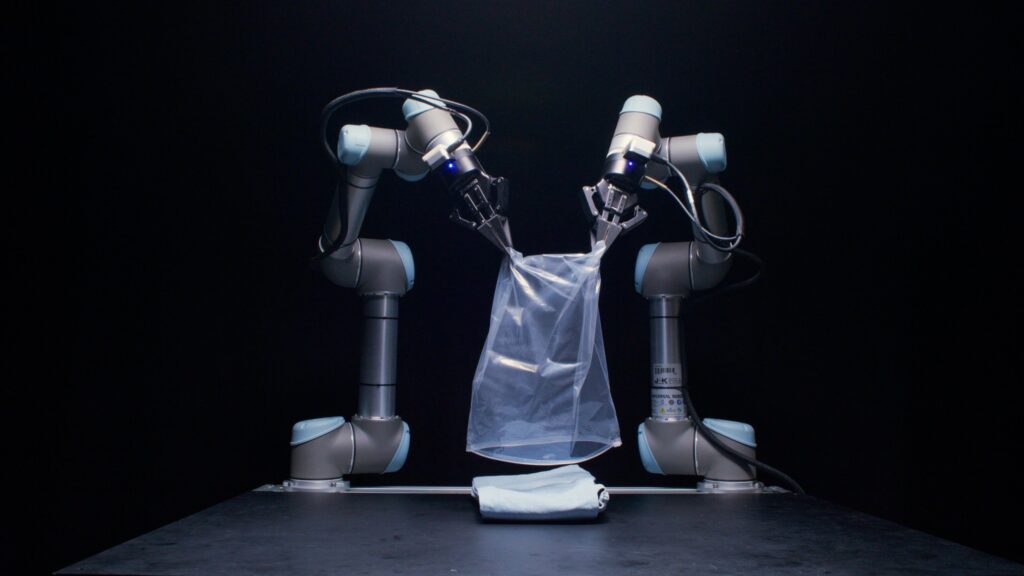
Two futures, one bet
We expect large monolithic models to give way to orchestrated families of smaller, specialized models. That is how inference becomes light enough to run on the edge and cheap enough to pay off.
As compute gets cheaper, bigger models will move forward too, and our path pays off either way. Experts that clear the profitability threshold get rolled out today, not in ten years. Every roll-out puts another robot into real production, tackling some of the hardest manipulation tasks. That is our data flywheel. By the time large models become affordable, we intend to run the largest fleet of dexterous robots in the world, and with it the most valuable dataset for complex manipulation.
In one future, experts win on cost. In the other, data wins, and we will have it. Either way, the way there runs through roll-outs.
Funding and deployments will meet task by task, each one clearing the customer’s threshold. That is why we are building bentic. If there is a task in your production that no robot has solved economically yet, we want to hear about it.